Pest control work order and estimate templates: what to include
Short answer: A pest control estimate should state the pest, the treatment method, the scope (areas and visits), the price and what is excluded. The work order then records what was actually done: products used, areas treated, the technician and the date. Keep the two matched, and keep the service report that follows, because that chain of paper is what settles disputes about results and repeat visits.
What a pest control estimate needs
An estimate is a promise about scope, so write the scope down. Name the target pest, the property type, the areas to be treated (interior, exterior, crawl space, attic), the number of visits and the price per visit or per program. If a one-time treatment will not stop a recurring problem, say so plainly and show the recurring option next to it.
List the exclusions as clearly as the inclusions. Typical exclusions are structural repairs, pests not named in the estimate, and re-treatment needed because the customer did not follow preparation instructions. Add an expiry date so a price quoted in spring is not demanded in winter.
What the work order records
The work order is the technician's record of the visit. It should capture the date and time, the address, the pest and conditions found, the areas treated, the products and application method used, and any areas that could not be accessed. Many jurisdictions require specific application records for licensed work, so check your state rules and add the fields they require.
Add a line for customer sign-off and a short list of follow-up instructions, such as how long to stay out of treated areas or when to expect activity to drop. A signed work order proves the visit happened and what the customer was told.
Match the estimate, work order and service report
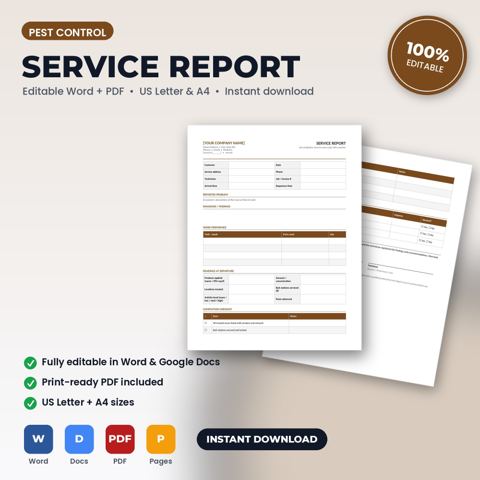
Use the same customer details, address and job reference on all three documents. The estimate says what you intended, the work order says what you did, and the service report summarises findings and next steps in plain language for the customer. When these three agree, a billing dispute rarely survives the first phone call.
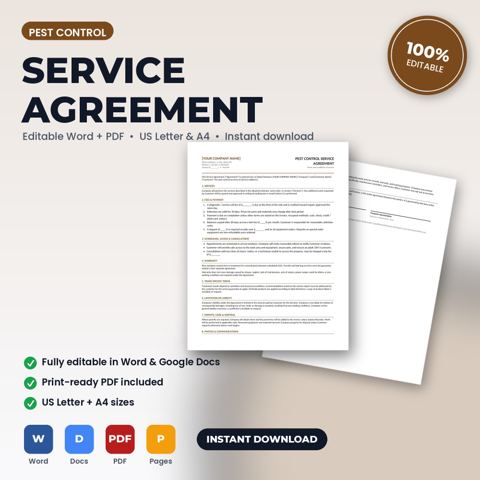
For recurring programs, add the service interval and the warranty or re-service terms to the agreement, not only to the estimate. Customers remember the sales conversation; the signed agreement is what you can point to later.
Price the job before you send the estimate
Many small operators price by feel and discover on the third visit that the program loses money. Work out your loaded labor cost per hour, your overhead per billable hour and the target margin first, then divide by the visits you expect. The free job price calculator on this site does exactly that arithmetic.
Review prices once or twice a year. Chemical, fuel and insurance costs change, and an estimate template that shows line items makes it easy to adjust one line instead of re-quoting everything.
Frequently asked questions
Do I need a separate work order if I already send an estimate?
Yes. The estimate is the quote before the job; the work order is the record of what was done. They answer different questions and both matter if a customer disputes the work.
What should a pest control service report include?
Findings, treatment performed, areas treated, products used, recommendations for the customer and the date of the next visit. Keep it short and written for a non-expert.
Are these templates a substitute for licensing or legal rules?
No. They are business forms. Licensing, application records and consumer rules vary by state, so confirm what applies to you.