HVAC service forms every contractor needs (and when to use each)
Short answer: An HVAC contractor needs five core forms: a customer intake and property sheet, an estimate, a service or maintenance agreement, an invoice and a job completion report. Add a seasonal maintenance checklist for recurring customers. Used in that order, they cover pricing, permission to work, payment and proof of what was done.
Before the visit: intake and estimate
The intake form captures the customer, the property, the equipment (make, model, age) and the problem described in the customer's own words. It saves a second phone call and gives the technician context before arriving. Record the system type and any access issues, such as attic or rooftop units.
The estimate turns the diagnosis into a priced scope. Separate labor, parts and any permit or disposal fees, offer good, better and best options where it makes sense, and add an expiry date. A customer who signs a clear estimate is much less likely to dispute the invoice.
The service agreement and maintenance plans
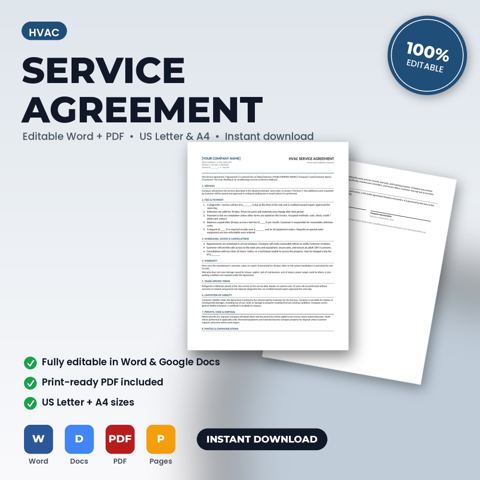
A service agreement sets the terms for recurring work: visit frequency, what each visit covers, response time, the price and how it renews. It also states what is not covered, such as parts outside the plan or damage from unrelated causes. Plain terms avoid arguments in peak season.
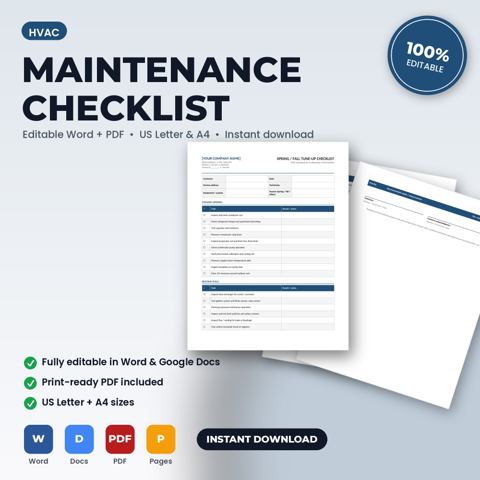
A seasonal checklist keeps the technician consistent: filters, coils, refrigerant readings, electrical connections, drain lines, thermostat operation. Give the customer a copy so the value of the visit is visible, which is what keeps a maintenance plan renewing.
After the job: completion report and invoice
The completion report records what was found, what was replaced, readings taken and any recommendations the customer declined. That last item matters: if a customer turns down a repair and the unit fails later, the signed note shows they were advised.
The invoice should mirror the estimate line by line and add anything approved during the job. Use sequential numbers, state payment terms and the warranty period, and send it the same day while the work is fresh.
Price it correctly, then standardise
Forms do not fix a price that is too low. Before you standardise, work out your loaded labor rate, overhead per billable hour and target margin; the free job price calculator on this site shows the break-even rate for your crew.
Once the numbers are right, use the same set of forms on every job. Consistency is what makes your paperwork credible to customers, insurers and, if it ever comes to that, a court.
Frequently asked questions
Which HVAC form should I set up first?
The estimate and the invoice, because they decide whether you are paid. Add the service agreement and checklist next.
Should every job have a signed agreement?
Recurring maintenance should. For one-off repairs a signed estimate that states scope, price and payment terms is usually enough.
Can I edit these forms with my logo and license number?
Yes. They are editable Word and PDF files with a header for your company details.